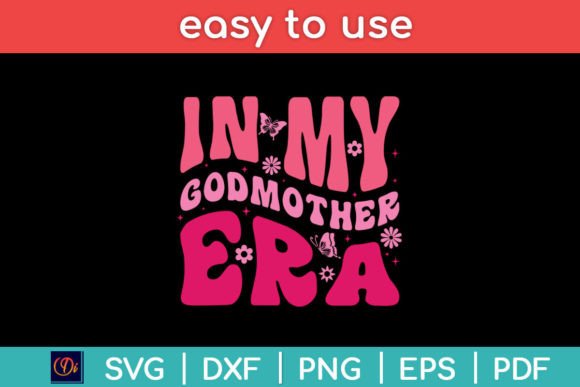
In My Godmother Era Retro Svg Design Review
As a designer who spends more time than I care to admit staring at stitch density charts and debating thread color palettes, I have learned that the difference between a good handmade product and a professional one often comes down to the design itself. When I first encountered In My Godmother Era Retro Svg Design, my initial reaction was not just about its aesthetic appeal, but about its practical viability in a real-world embroidery workflow. This is a print cut file compatible with Cricut and Silhouette cutting machines, which immediately signals its versatility as a digital asset, but for those of us working in machine embroidery, the question remains: how does it translate from a vector screen to a stitched reality?
First Impressions and Visual Personality
The phrase "In My Godmother Era" carries a specific cultural weight right now. It taps into a wave of nostalgia mixed with modern self-awareness, suggesting a time when things were simpler, warmer, or perhaps just more indulgent. The retro styling of the In My Godmother Era Retro Svg Design leverages this perfectly. Visually, it feels bold and confident. The typography likely dominates the composition, which is a smart choice for embroidery. In the world of machine embroidery design, text-heavy designs are common, but they are also risky. If the lettering is too thin or the kerning is off, the result can look cluttered or illegible after stitching.
From a reviewer’s perspective, the mood here is celebratory and personal. It doesn’t feel like a generic clip-art image; it feels like something meant to be worn or displayed with pride. The retro aesthetic suggests warm tones—mustard yellows, burnt oranges, or faded teals—which naturally guide our thinking toward thread colors that pop against neutral backgrounds. This design isn’t trying to be subtle. It is designed to be seen, which is crucial for any handmade product aiming to stand out in a crowded marketplace like Etsy or a local craft fair.
Real-World Application: The Custom Tote Bag Scenario
To truly evaluate this design, we need to put it to work. Let’s imagine a realistic scenario: a client has commissioned a set of custom tote bags for a bridal party. The bride wants something unique that celebrates her godmother, who played a pivotal role in her life. The client isn’t looking for delicate lace; they want something durable, stylish, and meaningful. They find the In My Godmother Era Retro Svg Design and ask if it will work on canvas totes.
This is where the design shines. A tote bag is an ideal substrate for this kind of graphic. The fabric is stable, the surface area is generous, and the item is meant to be carried around, making the visibility of the design important. When applied to a canvas tote, the embroidery file benefits from the texture of the fabric, which adds depth to the stitches. However, we must consider the scale. If the design is too small, the retro details might get lost. If it is too large, it might overwhelm the bag. For a standard 10x10 inch hoop, this design would likely fit comfortably in the center or slightly off-center, allowing for a balanced look.
But what about other products? Could this work for a sweatshirt? Absolutely. The retro vibe pairs exceptionally well with heavyweight cotton blends often used in sweatshirt embroidery. Imagine a cream-colored crewneck with the design centered on the chest. The contrast between the soft fabric and the structured stitches creates a premium feel. It transforms a basic garment into a statement piece, increasing the perceived value of the finished product. This is exactly the kind of item that drives sales for Etsy sellers and small shop owners.
Technical Considerations and Potential Pitfalls
No design is without its challenges, and as a professional reviewer, I must point out where caution is needed. While In My Godmother Era Retro Svg Design is described as a print cut file, converting it for embroidery requires careful planning. One of the biggest risks with text-based designs is the stability of the letters. If the font uses thin serifs or intricate swirls, these areas may require additional stabilizer support to prevent puckering or distortion during stitching.
I strongly advise testing this design on scrap fabric before committing to your final project. Pay close attention to the stitch density. If the fill areas are too dense, you risk needle breakage or thread tension issues, especially if you are using polyester threads on a home machine. Conversely, if the design relies heavily on running stitch for outlines, ensure that the spacing is wide enough to avoid tangling. Also, consider the fabric texture. On highly textured fabrics like bouclé or heavy waffle knits, fine details in the design may become obscured. In such cases, a smoother fabric background is preferable to maintain clarity.
Another critical factor is color contrast. The retro palette works best when the thread colors are chosen deliberately. Dark threads on dark fabric will disappear, while light threads on light fabric may lack definition. Always test your thread colors against your chosen fabric. A black and white mockup can help you visualize the contrast levels before you even load the bobbin.
Where to Use It Carefully
- Small Hoop Sizes: If the design exceeds your machine’s maximum hoop size, you will need to rehoop, which can lead to alignment issues. Ensure the design fits within your intended hoop dimensions.
- Curved Surfaces: Applying this to caps or hats requires a curved hoop attachment. The flat nature of the SVG may need adjustment to conform to the curve of the cap without distorting the text.
- Thin Fabrics: Delicate materials like silk or thin rayon may pucker under the weight of the embroidery. Use a tear-away stabilizer and consider reducing the stitch count if possible.
- Detailed Corners: If the design includes sharp angles or tiny decorative accents, inspect these areas closely. They are prone to thread breaks and may require manual trimming or reinforcement.
Impact on Brand and Customer Trust
For commercial embroidery professionals and craft business owners, the quality of the design directly impacts customer trust. A poorly executed design can make a brand look amateurish, while a well-stitched, thoughtful design enhances brand consistency. The In My Godmother Era Retro Svg Design offers a level of professionalism because it aligns with current trends while maintaining a classic retro appeal. Customers are more likely to leave positive reviews and recommend your services if the finished product looks polished and intentional.
Furthermore, this design is highly giftable. Personalized gifts carry emotional value, and a design that captures a specific era or relationship dynamic resonates deeply with buyers. Whether it is used for a personalized gift for a goddaughter, a wedding gift, or a holiday embroidery project, the design’s theme encourages connection. This emotional resonance can drive higher engagement and repeat business for creative entrepreneurs.
Practical Designer Notes for Success
- Test First: Always run a test stitch on scrap fabric to check for tension, density, and alignment.
- Check Licensing: Before selling finished items or digital products, confirm the licensing terms associated with the digital embroidery file. Ensure you have commercial rights if you plan to sell the finished product.
- Use Proper Stabilizer: Match your stabilizer to your fabric type. Cut-away for stretchy fabrics, tear-away for wovens, and hooping film for difficult materials.
- Review in Black and White: Create a grayscale version of the design to assess contrast and readability independently of color.
- Inspect Small Details: Zoom in on the SVG to identify any tiny elements that might not stitch well and consider simplifying them if necessary.
- Compare Backgrounds: Test the design on both light and dark fabric backgrounds to see how the thread colors perform in different lighting conditions.
In conclusion, the In My Godmother Era Retro Svg Design is a strong candidate for a variety of embroidery projects. Its retro charm, combined with its practical application on apparel and accessories, makes it a valuable addition to any designer’s library. By paying attention to technical details like stitch density and fabric choice, you can transform this digital asset into a stunning handmade product that delights customers and elevates your brand. Whether you are creating a tote bag design for a boutique or a custom apparel piece for a client, this design offers the visual punch and emotional connection needed to succeed in today’s market.